What Colors Are Better for Outdoor Lighting and Why
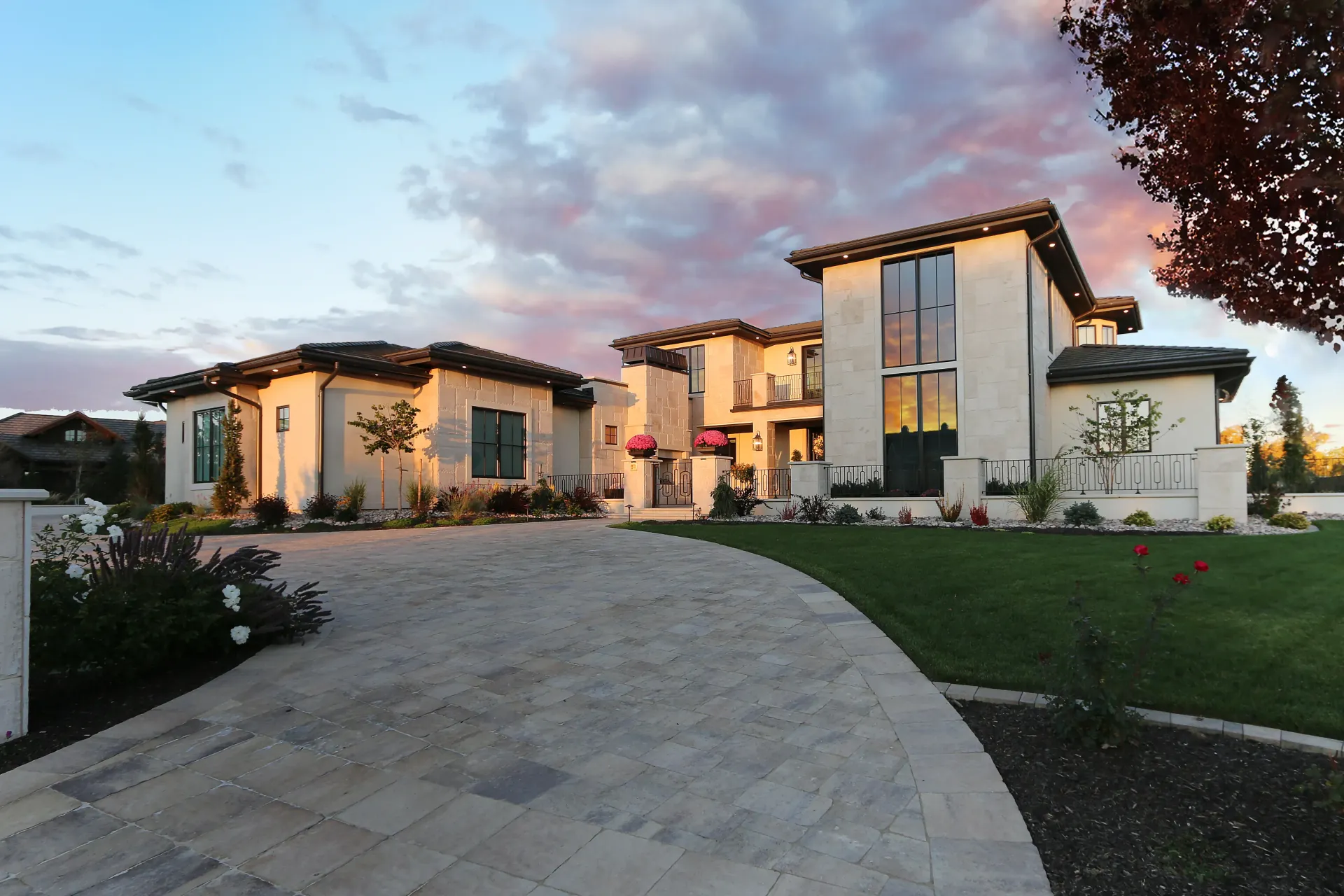
Two houses on the same block, same style, same fixtures. One feels inviting at night. One feels like a parking lot. The difference is usually color temperature.
Color temperature is how warm or cool a light source looks, measured in Kelvin. Lower Kelvin values read as yellow or orange. Higher values read as white or blue. On the packaging it'll be labeled something like 2700K, 3000K, 4000K, or 5000K. A few hundred degrees shifts the whole feel of your home after dark. Here's how to think through it, and what we use on Northern Colorado jobs.
The short answer
For residential exterior lighting, we stay in the 2700K to 3000K range almost every time. Warm white. That's the sweet spot for flattering stone, wood, brick, landscaping, and skin tone, which matters when you're entertaining on a patio or greeting someone at the door.
If you're not sure where to start, start there. 2700K on most fixtures, 3000K if you want something slightly crisper. We'll get into the exceptions in a minute.
Why warm white works outside
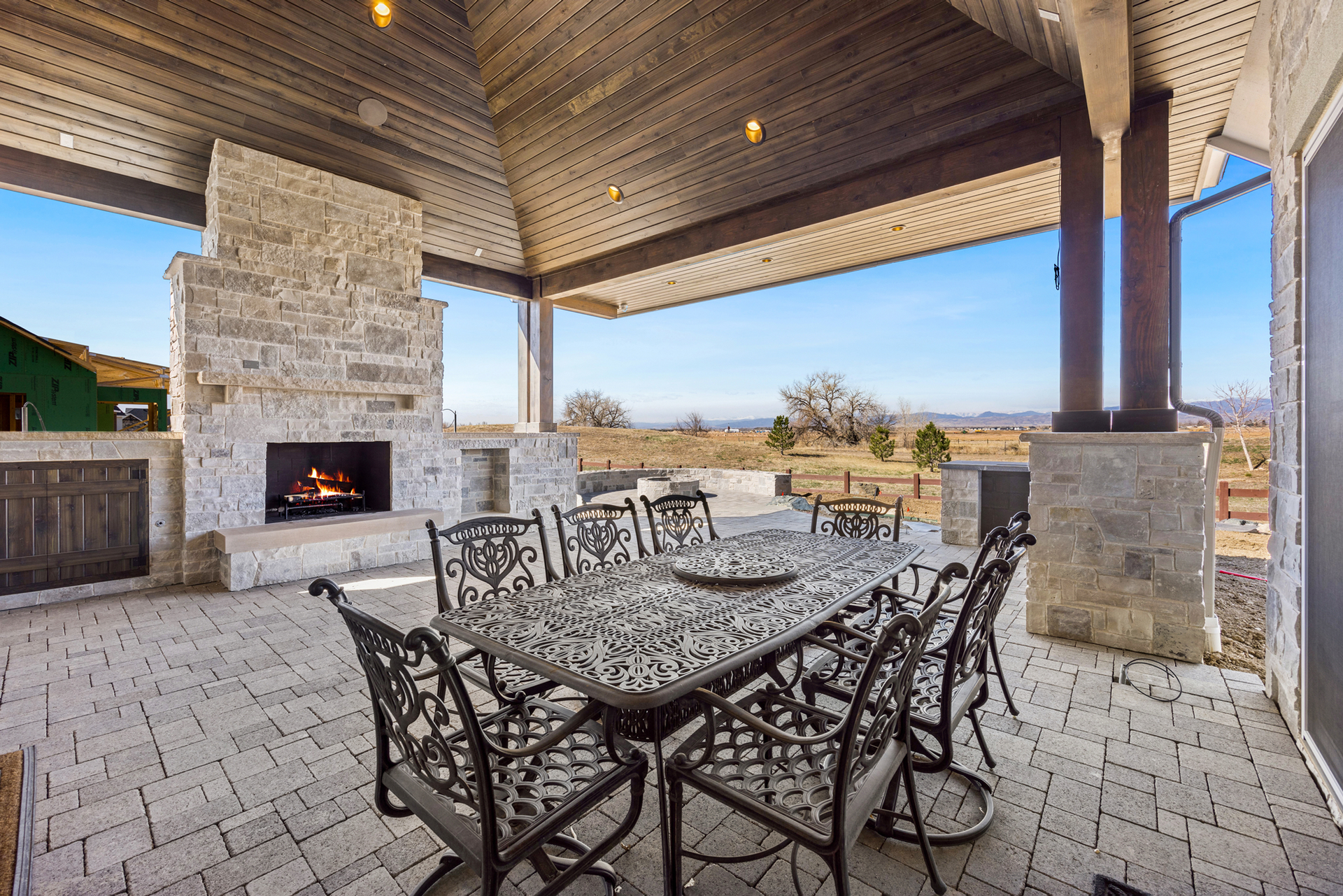
Outdoor environments already trend cool. Moonlight is cool. Snow is cool. Shadows read blue. When you drop a warm-temperature fixture into that setting, it creates a contrast your eye reads as welcoming. The stone of a chimney looks richer. Wood siding looks alive. Foliage looks green instead of gray.
Cooler light, 4000K and above, flattens that contrast. It makes the house feel utilitarian. Useful for a loading dock. Less useful for the front of a home that your family walks up to at night.
There's also a psychological layer. Warm light signals rest and home. Cool light signals alertness and work. Your front yard is not supposed to feel like an operating room.
When to use 3000K instead of 2700K
3000K is still warm, but a touch crisper. We'll reach for it when:
The exterior uses a lot of cool-toned materials, gray stone, white trim, modern steel accents. 2700K can look too yellow against a cool palette. 3000K sharpens it up.
The architecture is modern or contemporary. Very warm tones on a sleek modern façade can read dated. 3000K threads the needle.
You want slightly more color accuracy for task areas, like a grill station, outdoor kitchen, or detailed landscaping you want to see clearly.
Where 4000K has a place
4000K, sometimes called "cool white" or "neutral white," has a narrow role outside.
Security lighting. If the whole point of a fixture is to deter and illuminate a threat, you want clarity, not warmth. 4000K reads as alert, and security cameras often capture better footage under it.
Functional service areas. A detached garage, a workshop, a utility side of the house. Places where you're doing tasks rather than hosting.
Commercial or quasi-commercial exteriors. A short-term rental property with parking might warrant cooler lighting for visibility.
Even then, we'll usually keep 4000K out of sightlines from the main living areas. A cool-temperature floodlight on the back of a garage is fine. The same fixture pointed at the patio will ruin the patio.
Why 5000K and above almost never belongs on a home
5000K and higher is marketed as "daylight" and for years was the default on builder-grade LED fixtures because it produces the highest lumen output per watt, so it tests well on the spec sheet.
It also makes your house look like a gas station.
5000K in a residential exterior context is harsh, clinical, and bluish. It doesn't flatter anything except maybe a solar panel array. We occasionally see it on older security floods, and we almost always swap those out when we're doing a lighting update.
Color rendering index (CRI) matters almost as much
Kelvin isn't the full story. Color rendering index, CRI, is a measure of how accurately a light source shows the colors of the objects it lights. A score of 100 matches natural daylight. A score of 70 is what you'd expect from cheap LED.
For residential outdoor lighting we look for CRI of 90+. Lower than that and reds start looking muddy, greens look washed out, and the whole yard reads like a photograph that's been processed poorly.
Spec sheets don't always list CRI, but it's worth asking. The difference between a 70 CRI and a 90 CRI fixture at the same color temperature is significant.
Consistency across fixtures
One of the subtle things that makes a well-lit property look designed is that every fixture reads the same temperature. If your path lights are 3000K, your sconces are 2700K, and your floodlight is 5000K, the whole system feels off even if each fixture is fine on its own.
When we're spec'ing a job, we match color temperature across all exterior fixtures within visible range of each other. It's a small discipline that makes a big difference.
A note on smart bulbs and adjustable fixtures
Some exterior fixtures now offer adjustable color temperature, usually across a 2200K to 5000K range. They're useful for flexibility, and convenient if you want the option to run warmer during dinner and cooler during a security event.
Quality on these varies. The cheap ones shift colors oddly across the range and tend to fail faster in Colorado weather. If you're going this route, stick with reputable brands rated for exterior use.
How color ties into the rest of the plan
Color temperature is one layer of a good lighting plan. Lumen output, fixture type, aim, and placement all matter too. Our outdoor lighting selection guide walks through the whole decision, and our rundown of types of outdoor lighting shows how each fixture category fits.
If you're still dialing in how bright each fixture should be, we covered that in how many lumens you need for outdoor lighting.
And if you're doing more than a swap of a single fixture, check whether your project needs a permit. We explain what triggers one in permit requirements for exterior lighting installation in Colorado.
Final thoughts on choosing the right outdoor lighting color
2700K to 3000K for almost every residential exterior. 4000K reserved for security and service areas. 5000K and up, basically never. CRI of 90+ whenever you can get it. Consistent color across all fixtures within sight of each other.
We've been handling this kind of work across Northern Colorado since 1998. The full scope of our lighting services lives on our indoor and outdoor lighting installation page, and lighting fits in with everything else we cover across home maintenance and home renovations.
Pick the right color and your house reads the way you want it to, every night.