Choosing Outdoor Lighting: A Practical Guide for Northern Colorado Homeowners
Good outdoor lighting does more than look nice. It keeps your family safe on icy walkways in January. It shows off the stonework you paid good money for. It adds usable hours to your patio when the sun drops behind Horsetooth. Get it right, and you barely think about it. Get it wrong, and you spend five years squinting at a porch light that's too harsh or a floodlight that lights up the neighbor's bedroom instead of your driveway.
We've been installing lighting on Northern Colorado homes since 1998. Here's how we think through the decision with our clients, and how you can approach it yourself.
Start with the job each fixture has to do
Outdoor lighting isn't one category. It's at least four, and mixing them up is the most common mistake we see.
Security lighting scares off what shouldn't be there and helps you see who's at the door. It's bright, it's motion-activated, and it points outward from the house.
Path lighting keeps feet where they're supposed to be. Think low-level glow along walkways, steps, and any transition where a guest could misjudge a grade change.
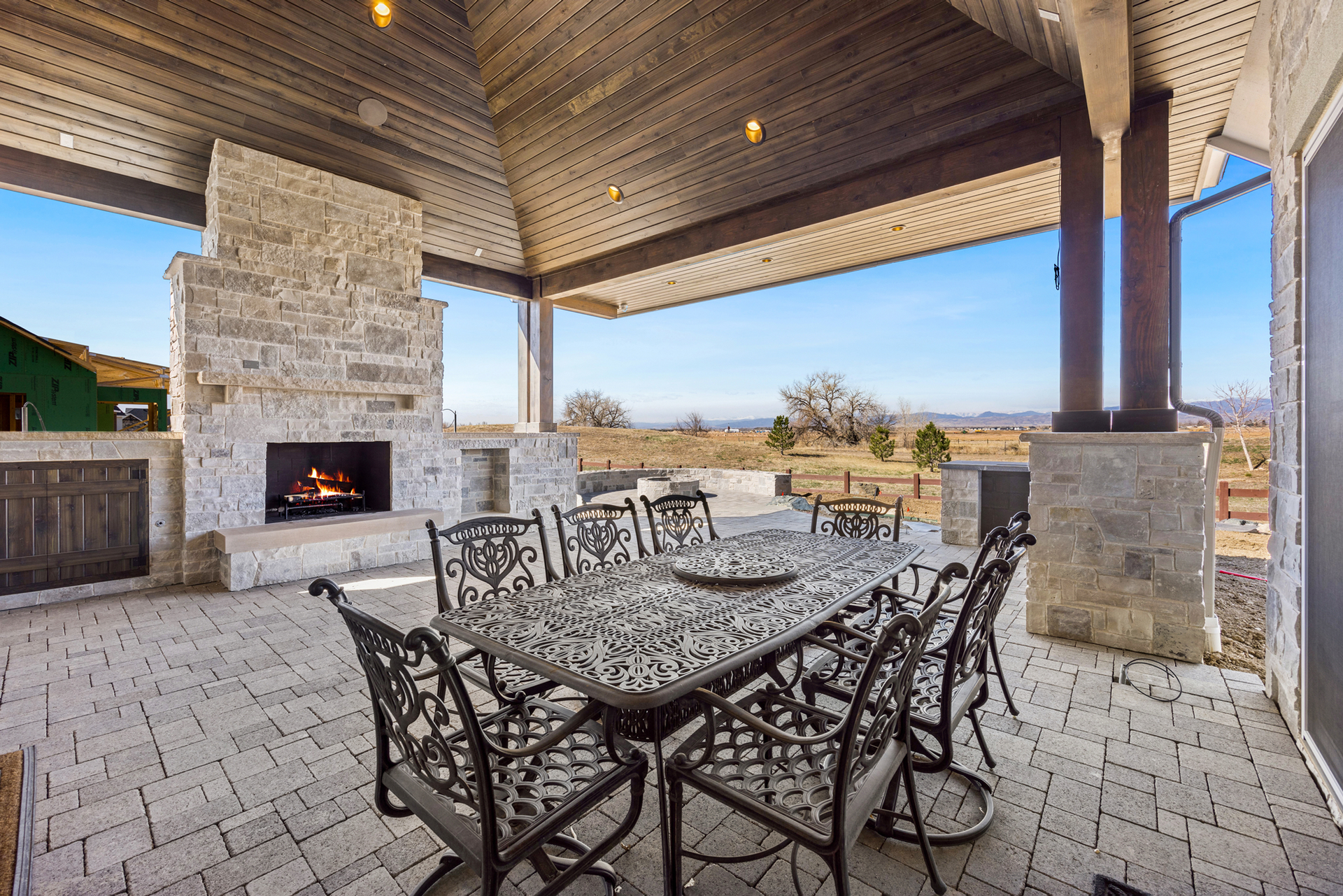
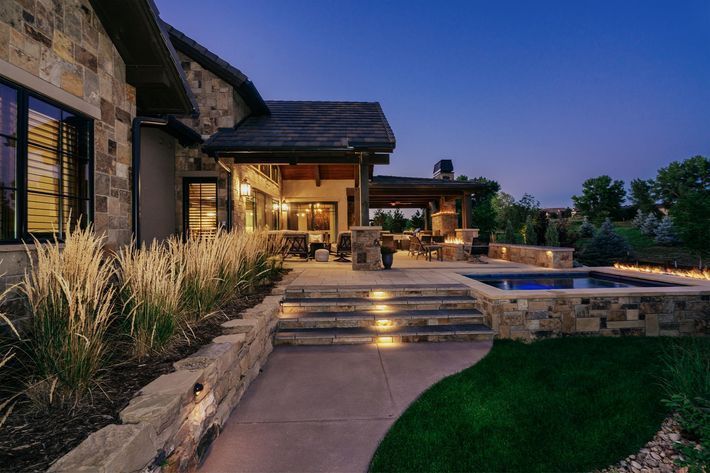
Accent lighting is the fun part. Uplighting on an aspen, grazing light on a stone fireplace chimney, moonlight effects under a deck pergola. This is where your house starts looking like something.
Task lighting gives you useful light for grilling, reading on the porch, or finding your keys in the entryway planter.
Before you pick a single fixture, walk the property at dusk and write down the jobs. Then pick fixtures for each one. Not the other way around.
Match the fixture to the Colorado climate
Fort Collins weather is hard on hardware. Hail one afternoon, UV cooking plastic the next, then a 40-degree temperature swing by bedtime. Cheap fixtures don't survive it.
We look for cast brass, copper, or powder-coated aluminum for anything exposed. Plastic lenses crack under hail; glass holds up longer.
Gasketed seals matter more here than they do in a milder climate. If the listing says "weather resistant" without a clear rating, skip it. Look for IP65 or better for fixtures that catch rain, and IP67 for anything near grade that might sit in snowmelt.
For a deeper rundown of fixture categories and where each one belongs, see our guide to types of outdoor lighting.
Get the brightness right, not just bright
More lumens is not automatically better. A 3,000-lumen floodlight pointed at a front door is aggressive, not welcoming. A 50-lumen path light on a 40-foot driveway is invisible.
The right answer depends on mounting height, the surface you're lighting, and what the fixture is meant to do. Path lights typically land between 50 and 200 lumens. Porch lights sit around 400 to 800. Floodlights range widely, 700 to 2,000+ depending on coverage area.
We wrote a full breakdown of this in our piece on how many lumens you need for outdoor lighting. If you're spec'ing fixtures yourself, read it before you buy anything.
Pay attention to color temperature
This is where a lot of otherwise good outdoor lighting plans fall apart. Color temperature is measured in Kelvin, and a few hundred degrees changes the whole feel of your home after dark.
Warm white around 2700K to 3000K looks like incandescent light. It flatters stone, wood, and landscaping. Neutral white around 3500K to 4000K is crisper and better for task areas. Anything above 5000K starts to feel like a gas station.
For most residential exteriors in Northern Colorado, we stay in the 2700K to 3000K range and let the fixtures layer warmth into the evening. If you want the full explanation of why, we covered it here: what colors are best for outdoor lighting and why.
Think in layers, not in dots
A common trap is treating outdoor lighting as a list of fixtures to buy, instead of a composition. The houses that look best at night have multiple layers working together. A dim wash on the architecture, stronger accents on specimen trees, path lights at ankle height, and a porch light that's just bright enough to see a face.
When you walk a well-lit property, you usually can't see where the light is coming from. You just see the house. Aim for that.
Don't skip the permit question
In Colorado, some exterior lighting work needs a permit. Low-voltage landscape lighting usually doesn't. Anything tied into line-voltage circuits, new dedicated runs, or outdoor service panels often does.
This is worth getting right the first time. Unpermitted electrical work can bite you during a home sale, an insurance claim, or a future inspection. We walk through the details in do you need a permit for exterior lighting installation in Colorado.
When to bring in a pro
If you're swapping a porch light fixture, you probably don't need us. If you're running new circuits, mounting fixtures on a two-story façade, or designing a layered scheme across a half-acre lot, it's worth having a licensed crew handle it. We stay current on Fort Collins code, pull the permits, and make sure the whole setup is built to survive Northern Colorado weather.
You can see the full scope of what we handle on our indoor and outdoor lighting installation page, and lighting fits alongside everything else we cover under home maintenance.
Final Thoughts on Choosing Outdoor Lighting
Write down the jobs each fixture has to do. Buy for the climate. Get the lumens right. Keep the color temperature warm. Layer the light. Don't skip the permit. And if it's a bigger project, don't compromise; your home is worth the care of a crew that does this for a living.
Ready to talk through a plan for your property? Give us a call, and we'll walk it with you.